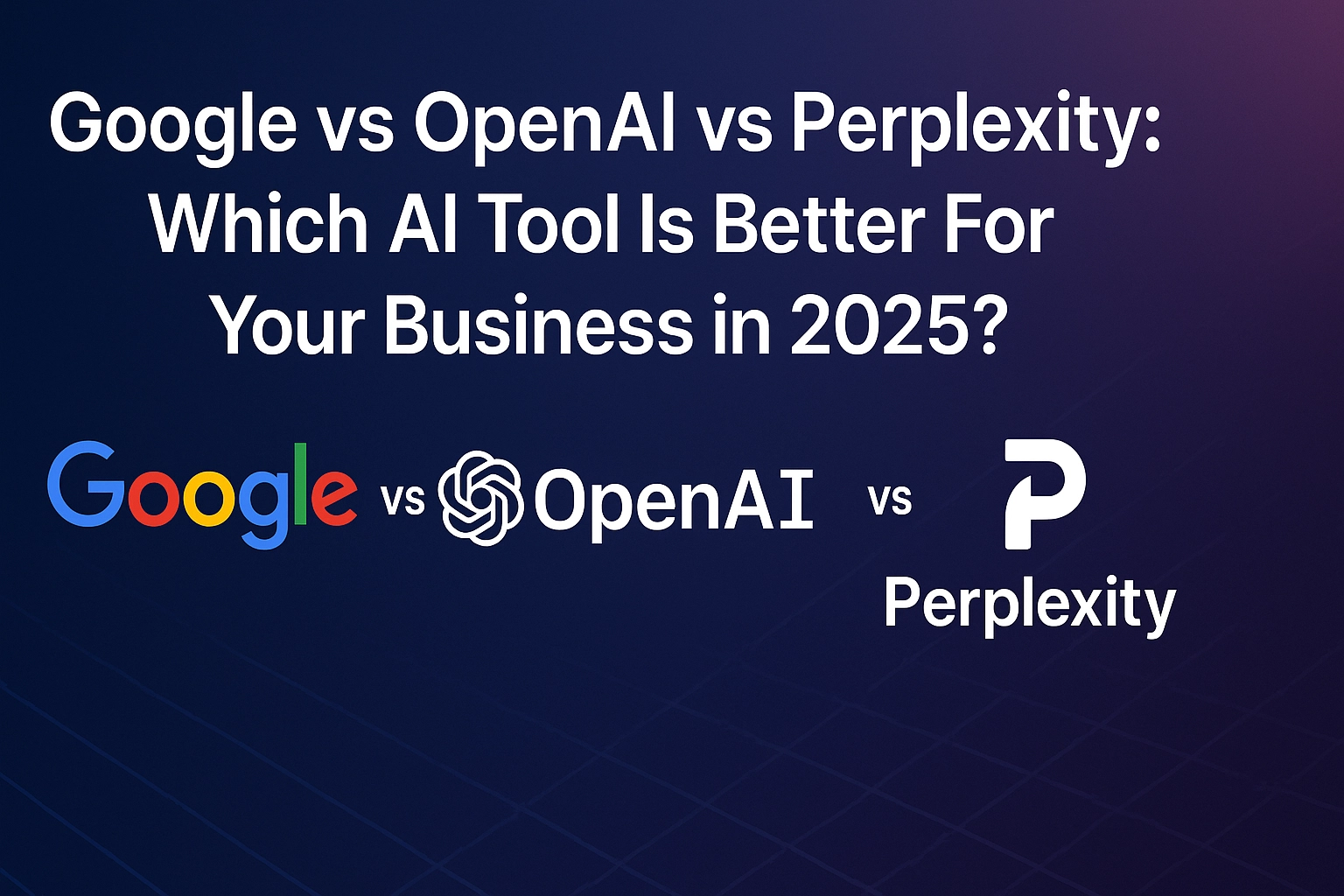
Here's the thing about AI tools in 2025 – they're not all created equal. While your buddy might swear by ChatGPT and your competitor raves about Google Gemini, the truth is way more nuanced than "one size fits all."
I've spent months testing these three giants with real businesses, and honestly? The results surprised me. Each platform has carved out its own specialty, and picking the wrong one could cost you serious productivity (and money).
What Makes These AI Tools Different in 2025?
Think of these AI platforms like specialized employees. Google Gemini is your ultra-organized assistant who knows every Google app inside and out. ChatGPT is your creative brainstorming partner who can write, code, and think outside the box. Perplexity is your research genius who can dig up current facts faster than you can google them.
The numbers tell the story. Google Gemini users save 105 minutes per week through workflow automation. Perplexity processes 30 million daily queries with 93.9% accuracy on factual questions. And ChatGPT? It still dominates creative tasks that require that human-like conversation flow.

But here's what most comparison articles won't tell you – the real game isn't about finding the "best" tool. It's about matching the right tool to your actual business needs.
Google Gemini: The Ecosystem Champion
If your business runs on Google Workspace, Gemini isn't just good – it's transformative. I watched a marketing team at a mid-sized company cut their content creation time in half just by using Gemini's integration with Google Docs and Drive.
Gemini's superpower is ecosystem integration. It doesn't just work with Google apps; it becomes part of them. Need to summarize a 50-page report in Google Drive? Done. Want to create presentations based on your Google Sheets data? Easy. The platform delivers a proven 1,146% annual ROI with break-even in the first month.
Here's what makes Gemini stand out:
• Native integration across all Google Workspace apps
• Multimodal capabilities that handle text, images, and code simultaneously
• Real-time collaboration features that actually work
• Enterprise-grade security that meets corporate standards
• Pricing starts at $19.99/month for business plans
The catch? If you're not heavily invested in Google's ecosystem, you're paying for features you won't use. Gemini's real-time information retrieval also lags behind specialized tools, making it less ideal for research-heavy tasks.
OpenAI ChatGPT: The Creative Powerhouse
ChatGPT remains the king of creative and conversational AI. There's a reason it sparked the whole AI revolution – it just gets human communication in ways other tools struggle with.
Last month, I helped a startup founder use ChatGPT to draft investor pitches, debug code, and brainstorm product names. The versatility is unmatched. ChatGPT leverages its massive pre-trained dataset combined with Bing API integration to handle complex, multi-layered questions that would trip up other platforms.

Where ChatGPT shines:
- Creative writing and content generation that feels natural
- Complex problem-solving across diverse topics
- Coding assistance with detailed explanations
- Brainstorming and ideation sessions that actually generate useful ideas
- Conversational interface that adapts to your communication style
The downside? ChatGPT's knowledge cutoff means it's not great for real-time market analysis or current events. You'll need to supplement it with other tools for research-intensive work.
Perplexity AI: The Research Machine
Here's where things get interesting. Perplexity AI might be the newcomer, but it's absolutely crushing the research game. With 93.9% accuracy on factual questions and the ability to complete research tasks 60x faster than traditional methods, it's become indispensable for knowledge workers.
I recently watched a business analyst use Perplexity to research competitive pricing across 15 companies in 20 minutes – a task that used to take half a day. The platform processes real-time web searches and synthesizes information from hundreds of sources with proper citations.
Perplexity's secret sauce is its multi-model approach. It combines GPT-4, Claude, and Gemini with real-time web search, giving you current information that other AI tools simply can't access. Users report saving 30+ minutes daily, leading to a 1,953% annual ROI for research-heavy roles.
The limitations are clear though. If you need creative writing or casual conversation, Perplexity feels robotic. It's built for facts and research, not creativity or brainstorming.

Which One Should You Actually Pick?
Here's my honest take after testing all three with real businesses:
Choose Google Gemini if you live in Google Workspace and need seamless productivity automation. A design agency I worked with saw immediate results because their entire workflow already happened in Google apps.
Go with ChatGPT if creativity and versatility matter more than real-time accuracy. Content creators, developers, and anyone doing exploratory work will find it invaluable.
Pick Perplexity if your business depends on current, accurate information. Market researchers, analysts, and consultants are seeing the biggest productivity gains here.
But here's the plot twist – many successful businesses aren't choosing just one. They're using 2-3 platforms strategically. Gemini for daily productivity, ChatGPT for creative projects, and Perplexity for research. The combined monthly cost ($60-90) is often less than hiring one additional employee, with much higher productivity returns.
The real question isn't which AI tool is "best" – it's which combination of tools fits your workflow, budget, and growth plans. What specific business challenges are you trying to solve with AI, and how much time are you currently spending on tasks these tools could automate?