
Ever watched a 15-second video that got 2 million views and thought "I could never do that"? Here's the thing, viral short-form content isn't about being young or naturally "internet savvy." It's about following a simple formula that anyone can master in minutes.
Short-form videos now make up 82% of all internet traffic. TikTok, Instagram Reels, YouTube Shorts, they're not going anywhere. And the creators making bank aren't all teenagers with perfect skin and dance moves. They're regular people who cracked the code.
The 3-Second Hook Formula That Actually Works
Your first three seconds determine everything. Most people scroll past content in 1.7 seconds, so you need to grab attention fast. Here's what works:
Start with the payoff. Don't build up to your best moment, lead with it. If you're showing how to fix something, start with the "after" shot. If you're sharing a tip, give away the result first, then explain how.
Use pattern interrupts. Do something unexpected right away. Hold an unusual object, wear something bright, or start mid-conversation. Your brain is wired to notice things that don't fit the pattern.
Ask a question that creates tension. "What would you do if…" or "Why does everyone think…" instantly makes viewers curious. They'll stick around for the answer.
Drop a surprising statistic. Numbers grab attention, especially when they're counterintuitive. "95% of people do this wrong" or "This saves me 2 hours every day" work because they promise valuable information.
The key? Don't waste time with long intros or explaining who you are. Jump straight into value. You've got seconds, not minutes.
The 5-Minute Content Creation Process
Creating viral content doesn't require hours of planning. Here's how to do it fast:
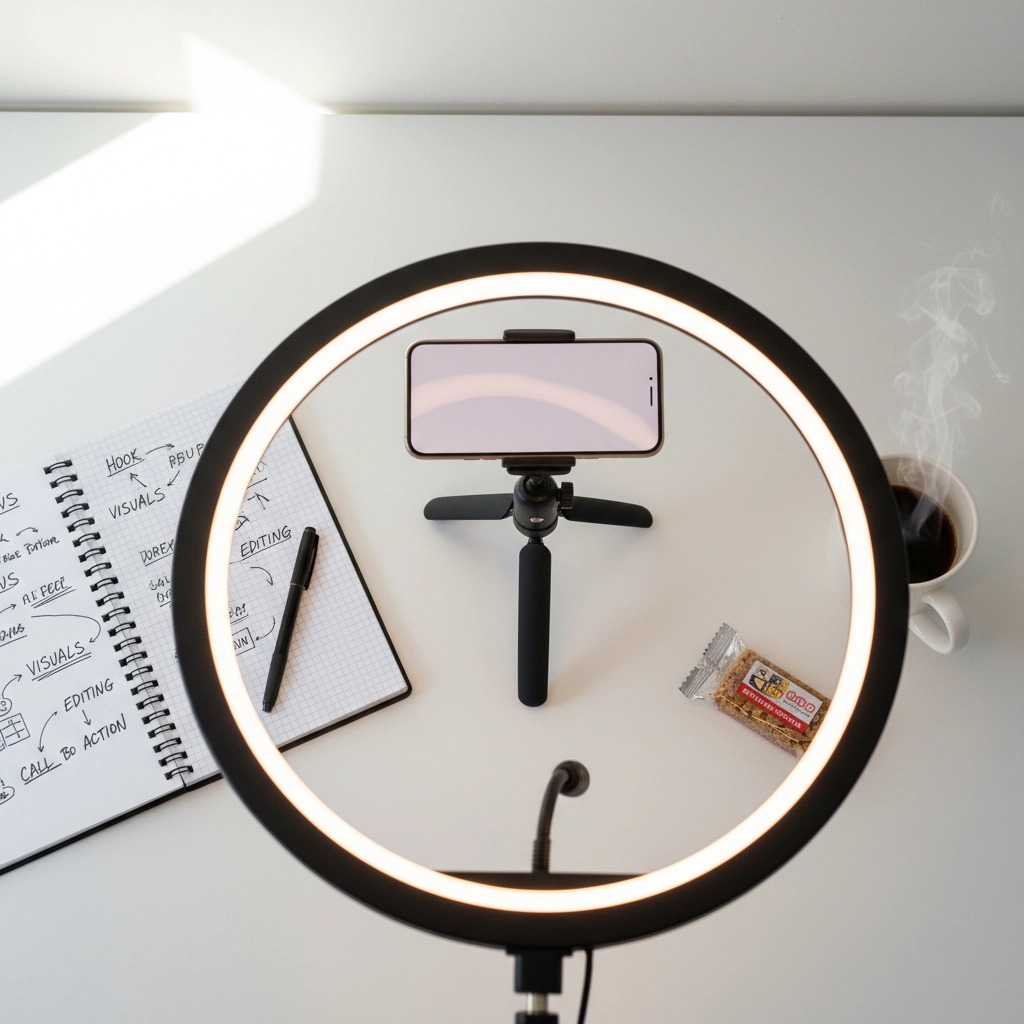
Minute 1: Pick your angle (30 seconds) and location (30 seconds). Choose one simple tip, trick, or insight you can share. Not three things, one. Then find decent lighting. A window works fine. You don't need professional equipment.
Minute 2: Script your hook and key points. Write down your opening line and 2-3 main points. Keep it conversational, like you're talking to a friend. Practice saying it once out loud.
Minutes 3-4: Record multiple takes. Film 3-5 versions of your content. Vary your energy, try different angles, experiment with gestures. Most people nail it on take 3 or 4, not the first try.
Minute 5: Quick edit and post. Trim dead space, add captions if needed, and upload. Don't overthink it. Perfection kills more viral content than imperfection does.
The secret? Batch this process. Once you get the rhythm, you can create 5-10 pieces of content in 30 minutes.
Platform-Specific Optimization Secrets
Each platform has quirks, but you don't need to reinvent your content for each one:
TikTok loves authenticity over polish. Raw, unfiltered content often performs better than highly produced videos. Show mistakes, be vulnerable, let your personality shine through.
Instagram Reels reward consistency. Post at the same times, use trending audio, and engage with comments quickly. The algorithm notices when creators show up regularly.
YouTube Shorts favor educational content. How-to videos, life hacks, and quick tutorials perform exceptionally well. Think "problem-solution" in under 60 seconds.
LinkedIn (yes, LinkedIn) is hungry for short-form content. Professional tips, career advice, and behind-the-scenes business content get massive reach. Most people ignore this goldmine.
Here's what works across all platforms:
• Clear, readable text overlays
• Consistent posting schedule (even if it's just 3x per week)
• Responding to comments within the first hour
• Using relevant hashtags (5-10 max, not 30)
• Adding captions for accessibility
Don't try to game every algorithm. Focus on one platform, master it, then expand.
Common Mistakes That Kill Virality
Most people sabotage their own content without realizing it. Here are the biggest viral killers:
Talking too long without visual interest. If you're speaking for more than 10 seconds straight, add text, graphics, or change camera angles. Attention spans are short: work with that, not against it.
Making it about yourself instead of the viewer. "I'm going to show you" performs worse than "You can do this." Make the viewer the hero of the story, not you.
Ignoring the first 24 hours. Viral content usually explodes within the first day or dies quickly. Promote your new content immediately: share it in stories, send it to friends, engage with every comment.
Following trends too late. By the time everyone's doing a trend, it's over. Either be early or put a unique spin on it. Better yet, start your own micro-trend in your niche.
Overcomplicating the message. One clear point beats three confusing ones. If you can't explain your video's purpose in one sentence, it's too complex.
Not studying what works. Spend 15 minutes daily watching content in your niche. What hooks do they use? How do they structure videos? What makes you stop scrolling? Then adapt (don't copy) those elements.
Perfectionism paralysis. Posted content that's "good enough" beats perfect content that never gets shared. You'll improve faster by creating and posting than by overthinking and delaying.
A friend of mine, Sarah, is a 45-year-old accountant who started making TikToks about tax tips. Her first video got 50 views. But she kept the 5-minute creation process, posted consistently for a month, and now averages 100K views per video. She's not Gen Z. She's not naturally charismatic on camera. She just followed the formula and stuck with it.
The difference between viral and invisible isn't talent: it's understanding what makes people stop, watch, and share. And now you know the formula.
What's the one piece of knowledge or skill you have that others would find valuable in a 30-second video?