Remember when everyone thought you needed billions of dollars and the world's most powerful computers to build cutting-edge AI? Well, a Chinese startup just flipped that script completely.
DeepSeek has become the talk of Silicon Valley, Reddit threads, and tech Twitter for one simple reason: they've proven that smart engineering beats throwing money at problems. While OpenAI and Google spent hundreds of millions building their AI models, DeepSeek created something just as powerful for about $6 million.
Yeah, you read that right. Six million.
The David vs. Goliath Story That's Shaking Big Tech
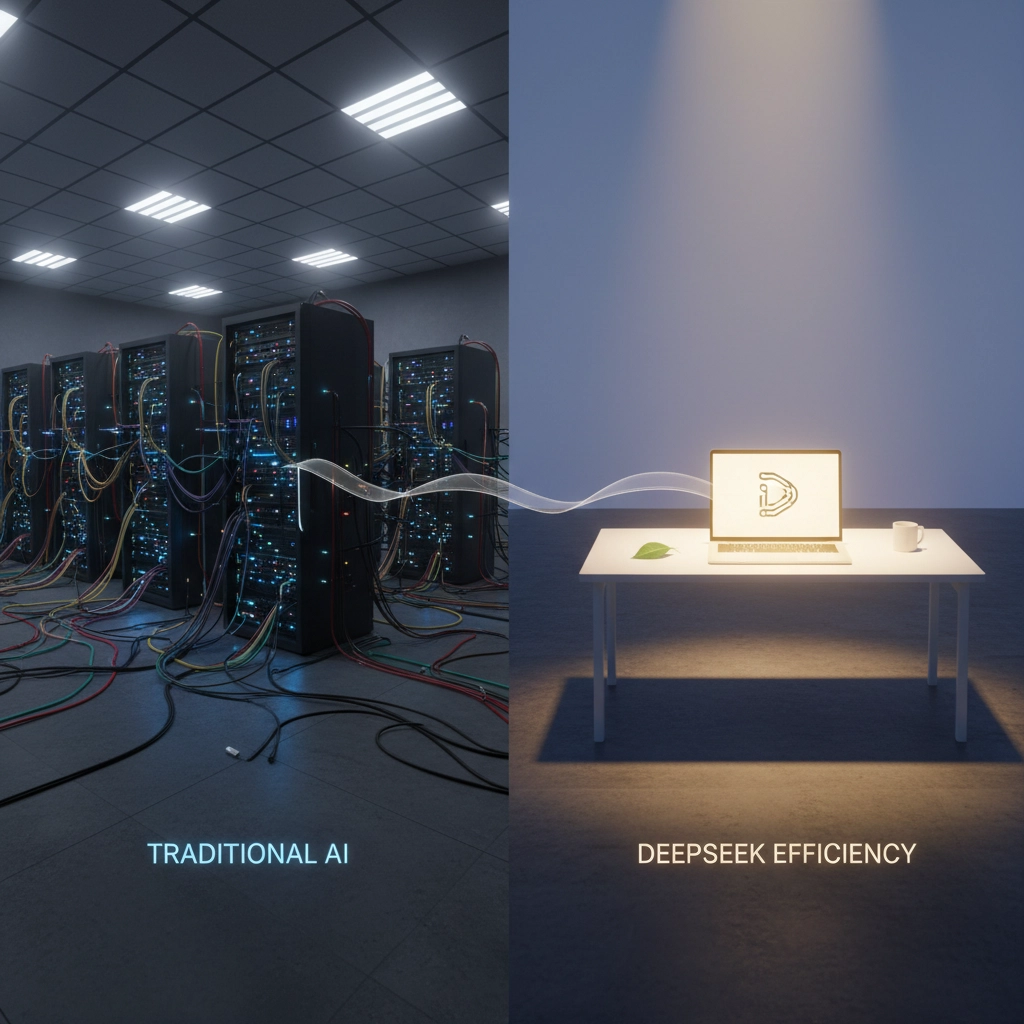
DeepSeek isn't your typical AI company. Founded in China, they took a completely different approach to building artificial intelligence. Instead of following the Silicon Valley playbook of "more data, more compute, more money," they got creative with their engineering.
Think of it like this: imagine everyone's been building sports cars by making the engines bigger and bigger. Then someone comes along and builds a car that goes just as fast by making the engine smarter, not larger. That's essentially what DeepSeek did with AI.
Their breakthrough came with two main releases. DeepSeek-V3 dropped in December 2024, followed by DeepSeek-R1 in January 2025. Both models shocked the industry by performing at the same level as OpenAI's best offerings while using dramatically less computational power.
The reaction was immediate and intense. Stock prices of major US tech companies took a hit. Industry leaders started calling it an "AI Sputnik moment" – comparing it to when the Soviet Union launched the first satellite and suddenly everyone realized the space race had real competition.
The Secret Sauce: How They Did It
So what's DeepSeek's secret? It comes down to three key innovations that most people are still trying to wrap their heads around:
Mixture-of-Experts (MoE) Architecture: Instead of building one massive brain that does everything, they created a team of specialized mini-brains. When you ask a question about coding, only the coding experts "wake up" to help. When you ask about math, the math experts handle it. This means the system uses way less energy and computing power for each task.
Efficient Reinforcement Learning: Most AI companies hire thousands of humans to manually review and improve their AI's responses. It's expensive and time-consuming. DeepSeek figured out how to automate most of this process, letting their AI learn from experience much more efficiently.
Knowledge Distillation: This is like having a master teacher compress years of wisdom into bite-sized lessons. DeepSeek took the knowledge from larger models and compressed it into smaller, more efficient versions with as few as 1.5 billion parameters.

Here's where it gets really interesting – they made most of their work open-source. While companies like OpenAI keep their models locked behind paywalls, DeepSeek said "here's how we did it, go build something amazing."
Why Silicon Valley Is Panicking (And You Should Pay Attention)
I was talking to a friend who works at a major tech company last week. He told me their entire roadmap got thrown out the window after DeepSeek's announcement. "We were planning to spend the next two years scaling up our compute," he said. "Now we're scrambling to figure out how to do more with less."
That reaction is happening across the industry. For years, the AI arms race has been about who can build the biggest, most expensive models. DeepSeek just proved that's not the only path forward.

The implications go way beyond just tech companies freaking out:
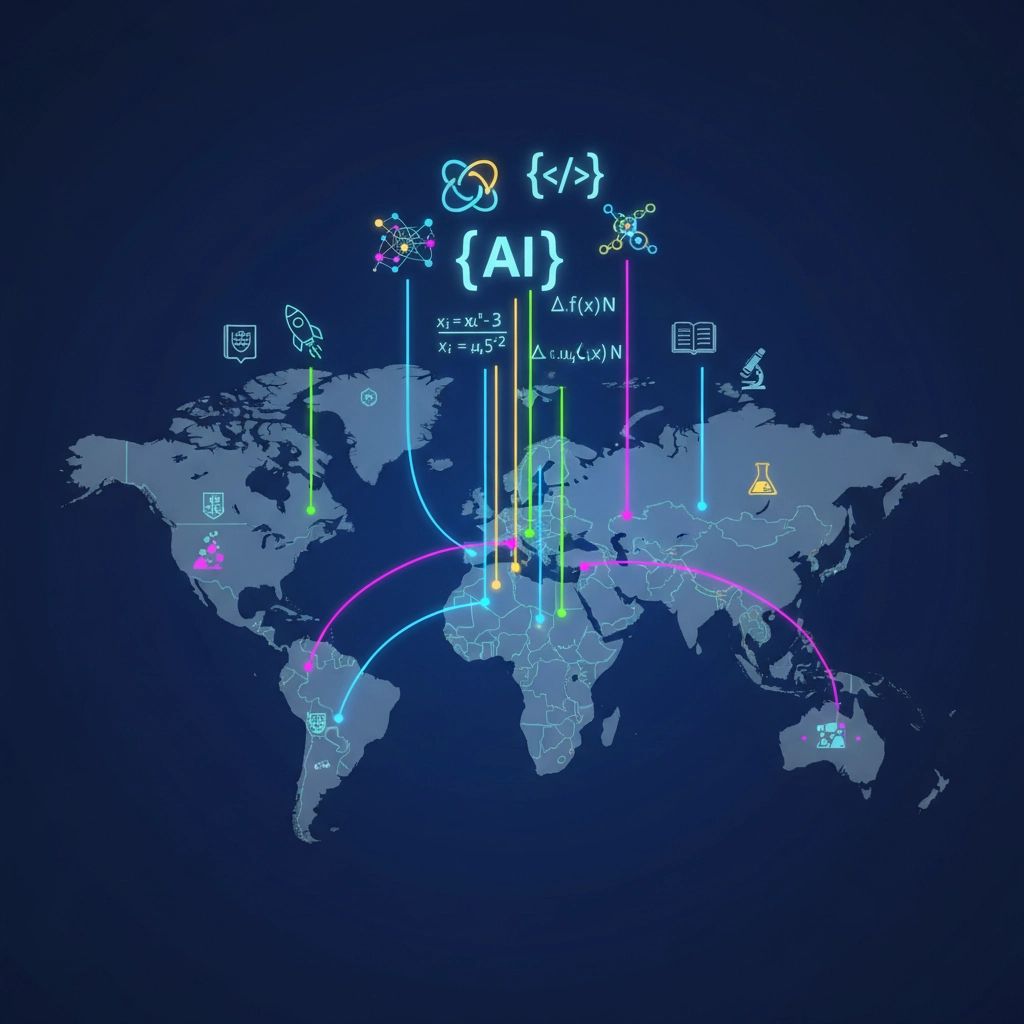
• Democratization of AI: Suddenly, universities, startups, and researchers in developing countries have access to world-class AI without needing Google's budget
• Innovation acceleration: When powerful tools become accessible, more people can build cool stuff with them
• Cost reduction: If AI development becomes cheaper, AI services become cheaper for everyone
• Competition increase: The AI field just got a lot more competitive, which usually means better products for consumers
But here's what really has people talking: DeepSeek's success challenges some fundamental assumptions about how AI progress works. The prevailing wisdom was that you needed massive datasets, enormous computing clusters, and billions in funding to compete at the frontier level.
DeepSeek proved that clever engineering and innovative approaches can level the playing field. It's like someone showing up to a Formula 1 race with a souped-up Honda Civic and keeping pace with the million-dollar cars.
What This Means for the Rest of Us
Now, you might be thinking, "Cool story, but how does this affect my daily life?" Fair question.
In the short term, you're probably going to see AI tools get cheaper and more accessible. When the cost of building AI drops dramatically, those savings eventually get passed down to consumers. That ChatGPT subscription or Adobe AI feature? It might cost less in the future.
More importantly, DeepSeek's approach opens up possibilities for AI applications in places where they weren't economically viable before. Small businesses that couldn't afford enterprise AI solutions might suddenly find them within reach. Researchers studying everything from climate change to medical diagnoses might get access to tools that were previously out of budget.
The open-source nature of much of DeepSeek's work also means innovation is going to accelerate. When thousands of developers around the world can build on top of cutting-edge AI models without paying licensing fees, weird and wonderful applications tend to emerge.
Think about what happened when smartphones became accessible to billions of people instead of just wealthy early adopters. Suddenly we got Uber, Instagram, TikTok, and thousands of other apps that changed how we live. We might be at a similar inflection point with AI.
There are some legitimate concerns worth mentioning. Since DeepSeek is a Chinese company, there are questions about data privacy and potential censorship in their models. Some critics have also raised questions about whether they used OpenAI's models in their training process, though the technical achievements speak for themselves.
The Bigger Picture
DeepSeek's rise represents something bigger than just one company's success. It's a reminder that innovation often comes from unexpected places and that established players can be disrupted by smart, resourceful competitors.
The AI field has been dominated by a handful of American companies with massive budgets. DeepSeek proved that technical creativity and efficient engineering can compete with pure financial muscle. That's good news for innovation and competition in general.
It also highlights how quickly the AI landscape can shift. Six months ago, most people hadn't heard of DeepSeek. Today, they're influencing how every major AI company thinks about development and deployment.
What's your take on this whole situation? Are you excited about AI becoming more accessible, or does the rapid pace of change in this field make you nervous about what comes next?