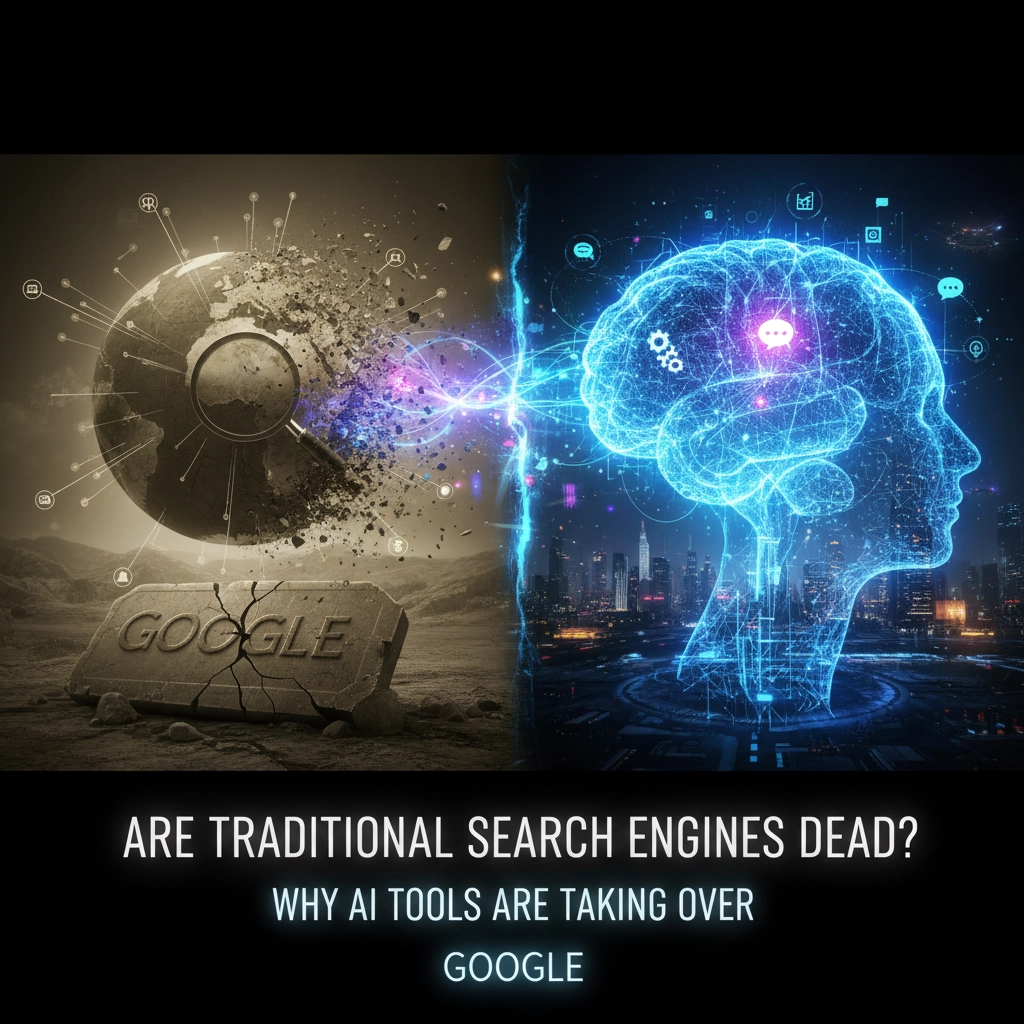
Remember when everyone said Netflix would kill movie theaters? Or that smartphones would make cameras obsolete? Well, here's another "death of an industry" story that's not quite what it seems. Despite all the buzz about ChatGPT and AI taking over everything, Google isn't going anywhere: at least not yet.
Here's a stat that'll blow your mind: 95% of people still use traditional search engines regularly. That's barely down from last year. So while your LinkedIn feed is flooded with "Google is dead" hot takes, the reality is way more interesting (and complicated).
The Real Numbers Don't Lie
Let's cut through the hype and look at what's actually happening. Sure, AI tool adoption hit 38% this year, but here's the kicker: growth is actually slowing down while search engine usage stays strong or even edges higher.
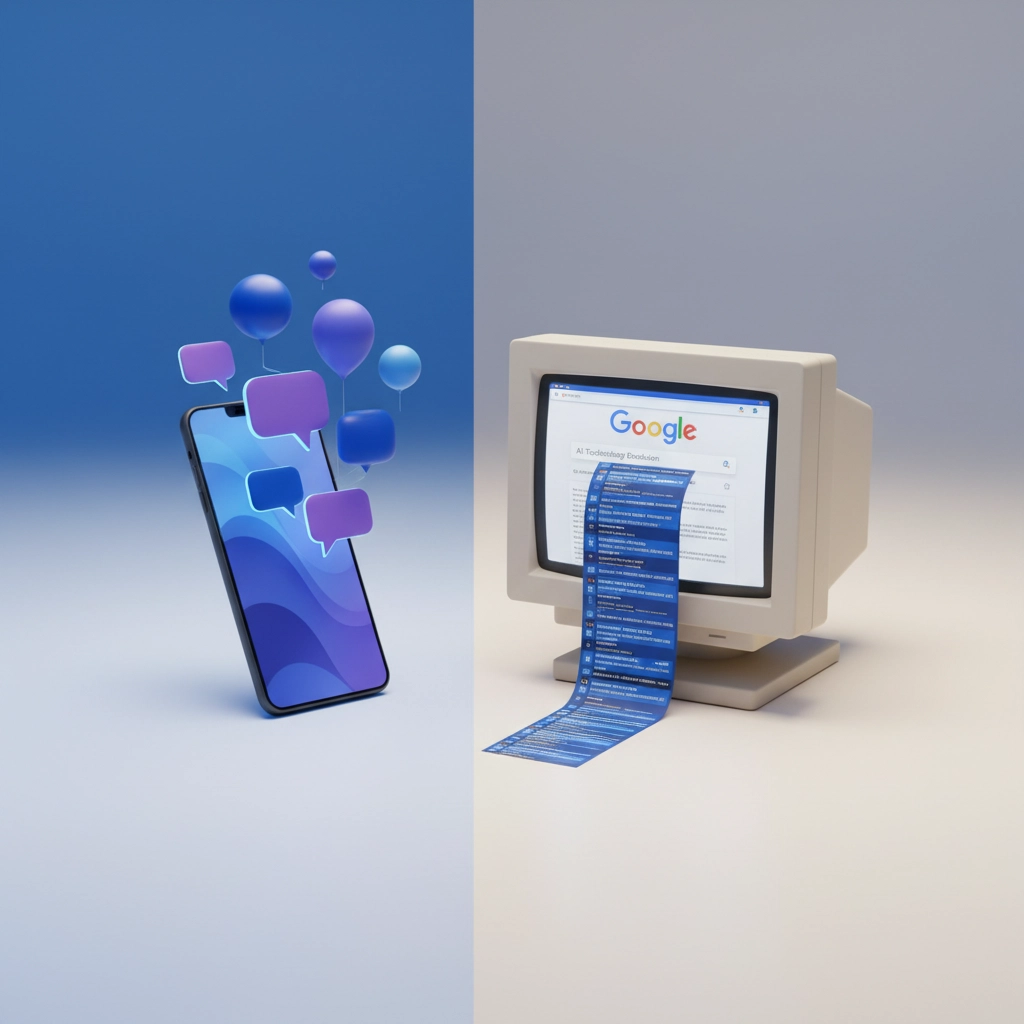
Think about your own behavior for a second. Even if you use ChatGPT daily, how many times did you still "Google it" this week? Probably more than you realize. That's because something fascinating is happening: heavy AI users actually rely on search engines more than the average person, not less.
It's like how people who read a lot of books also tend to read more articles online. One habit reinforces the other instead of replacing it.
The data shows that 44% of AI-powered search users say it's their primary source, topping traditional search at 31%. But flip that around: it means the majority still prefer Google or use multiple methods. We're not seeing replacement; we're seeing expansion.
Why Google Isn't Going Anywhere (Yet)
Here's where it gets interesting. AI tools aren't really competing with Google: they're doing different jobs entirely.
The Habit Factor
You know that moment when you need to find something online? Your fingers automatically type "google.com" before your brain even decides what to search for. Habits like this take decades to build and years to break. "Just Google it" isn't going away overnight.
Different Tools, Different Jobs
Most people use ChatGPT for brainstorming, summarizing long articles, or drafting emails. Then they hop over to Google to fact-check, find specific websites, compare prices, or look up local businesses.
It's like having both a Swiss Army knife and a toolbox. Sometimes you need the convenience of the multi-tool, other times you need the precision of a specific instrument.
Here's how the typical user journey actually works:
- Use AI to brainstorm blog post ideas
- Google "best blogging platforms 2025"
- Ask ChatGPT to explain the differences
- Google specific platform reviews
- Use AI to draft initial content
- Google for fact-checking and sources
Google's Secret Weapon: Evolution, Not Extinction
Here's where Google gets clever. Instead of fighting AI, they're absorbing it.

Google's AI Overviews already have 1.5 billion monthly active users. They're essentially cannibalizing their own traditional search results by putting AI-generated answers right at the top. It's like they looked at ChatGPT and said, "Hold my beer."
My friend Sarah, a marketing manager, told me something interesting last week. She said, "I used to open ChatGPT in a separate tab, but now Google just gives me the AI summary right there. Why would I switch?"
That's exactly Google's strategy. They're not letting external AI tools steal their users: they're making their own platform smarter instead.
The Crystal Ball: What Happens Next?
Now for the million-dollar question: what does the future actually look like?
The predictions are pretty wild. Some analysts think organic search traffic could drop 50% by 2028 as people embrace AI search. Others suggest ChatGPT might surpass Google's traffic by October 2030: if current growth trends continue.
But here's the thing about predictions: they assume current trends continue forever. Remember when everyone thought we'd have flying cars by 2020?

The more likely scenario? A hybrid world where:
- AI handles complex, conversational queries ("Help me plan a 3-day itinerary for Tokyo with a $500 budget")
- Traditional search covers quick facts, local info, and shopping ("best pizza near me")
- Google integrates more AI features to stay competitive
- New players emerge with specialized AI search tools
The Plot Twist Nobody Saw Coming
Here's where this story gets really interesting. While everyone's debating Google vs. ChatGPT, the real disruption might come from somewhere else entirely.
What if the future isn't about typing queries at all? Voice assistants, visual search, and brain-computer interfaces are all advancing rapidly. Maybe we're arguing about VHS vs. DVD while streaming is about to take over.
The companies that'll thrive aren't the ones trying to kill Google: they're the ones figuring out what comes after search entirely.
Bottom Line: It's Not Death, It's Evolution
So are traditional search engines dead? Nope. Are AI tools taking over Google? Not exactly.
What's happening is more like the shift from landlines to smartphones. Landlines didn't disappear overnight: they gradually became less relevant as smartphones offered more convenience. But even today, some businesses still use landlines for specific purposes.
The search landscape is evolving, not dying. Google's adapting, AI tools are finding their niche, and users are learning to juggle multiple tools for different needs.
The real question isn't whether AI will kill Google: it's how both will evolve to serve our changing needs. And honestly? That's way more exciting than a simple winner-takes-all story.
What do you think; will you still be "Googling it" in five years, or will you have moved on to something completely different?