Did you know that 95% of generative AI pilots are failing? Yet some companies are crushing it with AI while others waste millions on basic tools that don't move the needle. Here's what separates the winners from the wannabes.
Most businesses treat AI like a shiny new toy. They buy the latest ChatGPT subscription, install a few plugins, and wonder why their productivity hasn't skyrocketed. Meanwhile, enterprise leaders are using completely different strategies that actually work.
The Real AI Game: Integration Over Installation
Forget about collecting AI tools like Pokemon cards. Smart companies focus on deep integration instead.
Take Klarna's approach. Their AI customer service agent doesn't just answer questions: it handles the workload of 700 human agents across 23 markets. The secret isn't the AI itself. It's how they connected it to their entire customer database, order history, and support workflows.
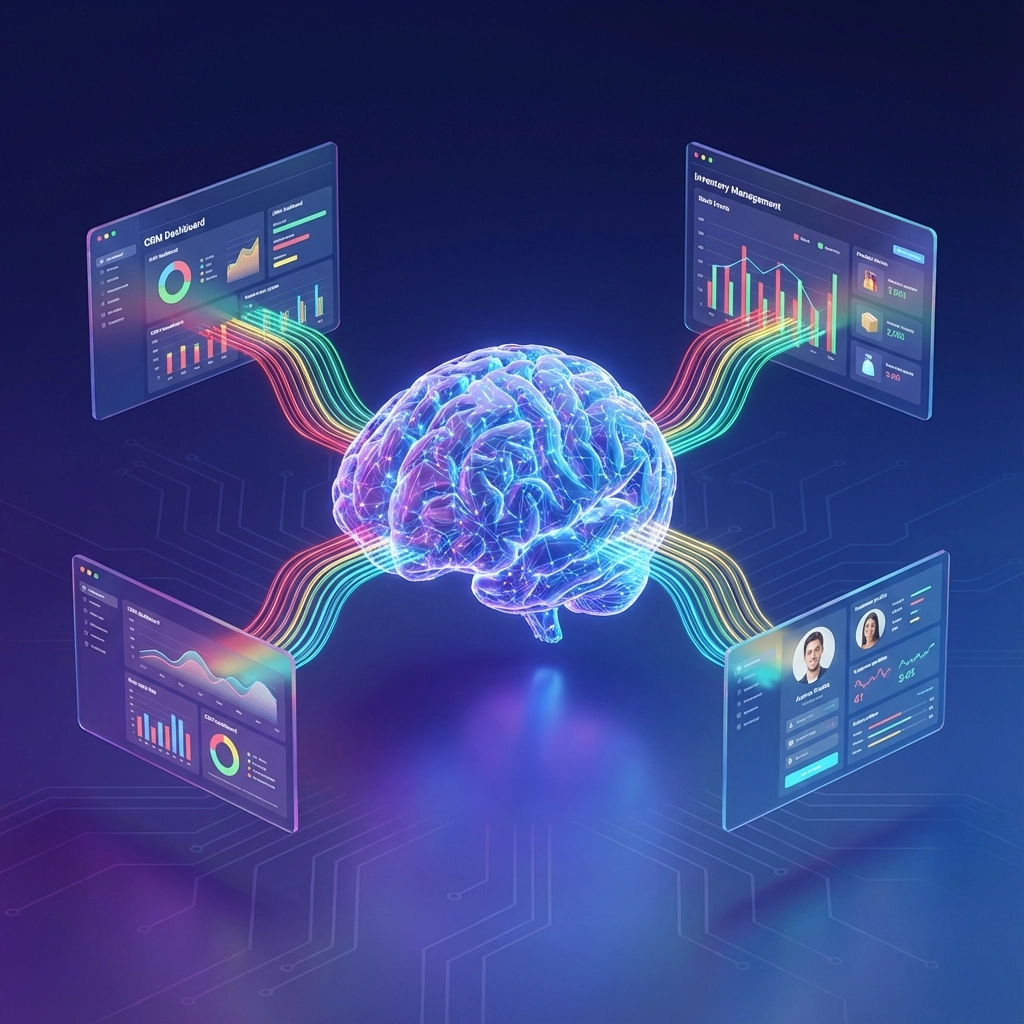
Here's what most companies miss: AI tools are only as good as the data they can access. If your AI can't see your CRM, inventory system, and customer history all at once, you're fighting with one hand tied behind your back.
The hack? Start with one AI platform that connects to everything, not ten separate tools that work in isolation.
Hack #1: Build Internal AI Solutions Instead of Buying Everything
Here's a shocking stat: Companies building custom AI solutions succeed way more often than those just buying off-the-shelf products.
Why? Because your business isn't generic. Your workflows, data, and problems are unique. Cookie-cutter solutions can't handle that complexity.
KUKA built their automated inquiry assistant using their own documentation and procedures. Condor created their AI-enhanced IT support system in weeks using AWS platforms. Both got better results than companies spending millions on vendor solutions.
The move? Identify your biggest pain point and build a custom solution around it. Start small, learn fast, iterate quickly.
Hack #2: Turn Customer Service Into a Profit Center
Most companies see customer service as a cost center. Smart companies flip the script.
Customer issue resolution appears in 35% of successful enterprise AI projects. But it's not just about answering questions faster. It's about turning every interaction into data that improves your entire operation.
Here's how it works:
- AI handles routine inquiries 24/7
- Complex issues get escalated to humans with full context
- Every interaction teaches the system something new
- Customer satisfaction goes up while costs go down
One retail company I know uses this approach to identify product issues before they become PR disasters. Their AI spots patterns in customer complaints and alerts product teams immediately.
Hack #3: Use AI for Massive Cost Cutting (Not Just Productivity)
Everyone talks about AI making workers more productive. But the real money is in cost optimization.
Enterprise AI platforms can reduce SaaS costs by 10-30% through continuous license optimization. They spot duplicate apps, unused licenses, and overprovisioned accounts automatically.

Smart procurement teams use AI to analyze spending patterns in real-time. They catch budget overruns before they happen and negotiate better deals based on actual usage data.
The approach? Audit your current software stack with AI tools that can identify waste. You'll probably find thousands of dollars in savings within the first month.
Hack #4: Create Unified Knowledge Systems That Actually Work
Most companies have knowledge scattered across dozens of platforms. Employees waste hours hunting for information that should take seconds to find.
Enterprise winners use AI platforms like Glean that connect to 100+ applications simultaneously. Employees can ask natural language questions and get answers from anywhere in the company's knowledge base.
But here's the advanced move: They train these systems on their specific terminology, processes, and context. A generic search for "customer onboarding" might return hundreds of results. A trained system knows exactly which version applies to your specific situation.
Hack #5: Implement Hybrid Human-AI Testing for Quality Assurance
Pure automation breaks things. Pure human testing is too slow. The winning combination? Hybrid approaches that leverage both.
Companies like Testlio use AI to handle routine testing while humans focus on edge cases and user experience issues. This accelerates release cycles without sacrificing quality.

The framework:
- AI handles repetitive test scenarios
- Humans tackle creative and contextual testing
- Both learn from each other's findings
- Quality improves while speed increases
Hack #6: Deploy Agentic AI for Complex Task Automation
Basic AI answers questions. Advanced AI takes action.
Leading platforms like Moveworks use agentic AI that understands complex employee requests, breaks them into steps, and executes actions across multiple applications.
Instead of "What's our PTO policy?" you can ask "Book me three days off next month and notify my team." The AI handles the entire workflow automatically.
This isn't science fiction. It's happening right now in companies that moved beyond basic chatbots to intelligent automation systems.
Hack #7: Focus on Measurable Outcomes, Not Tool Collection
Here's where most AI implementations fail: They optimize for features instead of results.
Successful companies define specific metrics before implementing any AI tool:
- Reduce customer response time by 50%
- Cut software costs by 20%
- Increase employee productivity by 30%
Then they ruthlessly track progress and adjust their approach based on data, not hype.
I worked with a manufacturing company that wanted to "do AI." After defining clear goals, we focused on one specific use case: predicting equipment failures. Six months later, they prevented $2 million in downtime. That's better than any fancy demo.
The Bottom Line: Strategy Beats Shiny Objects
Most companies approach AI like they're shopping for apps. They download tools, play around for a few weeks, then move on to the next shiny object.
Enterprise winners think differently. They identify specific business problems, design custom solutions, and measure results obsessively. They integrate deeply instead of adopting widely.
The difference isn't the technology. It's the strategy.
What's the one business process in your company that AI could completely transform if you approached it strategically instead of just buying another tool?