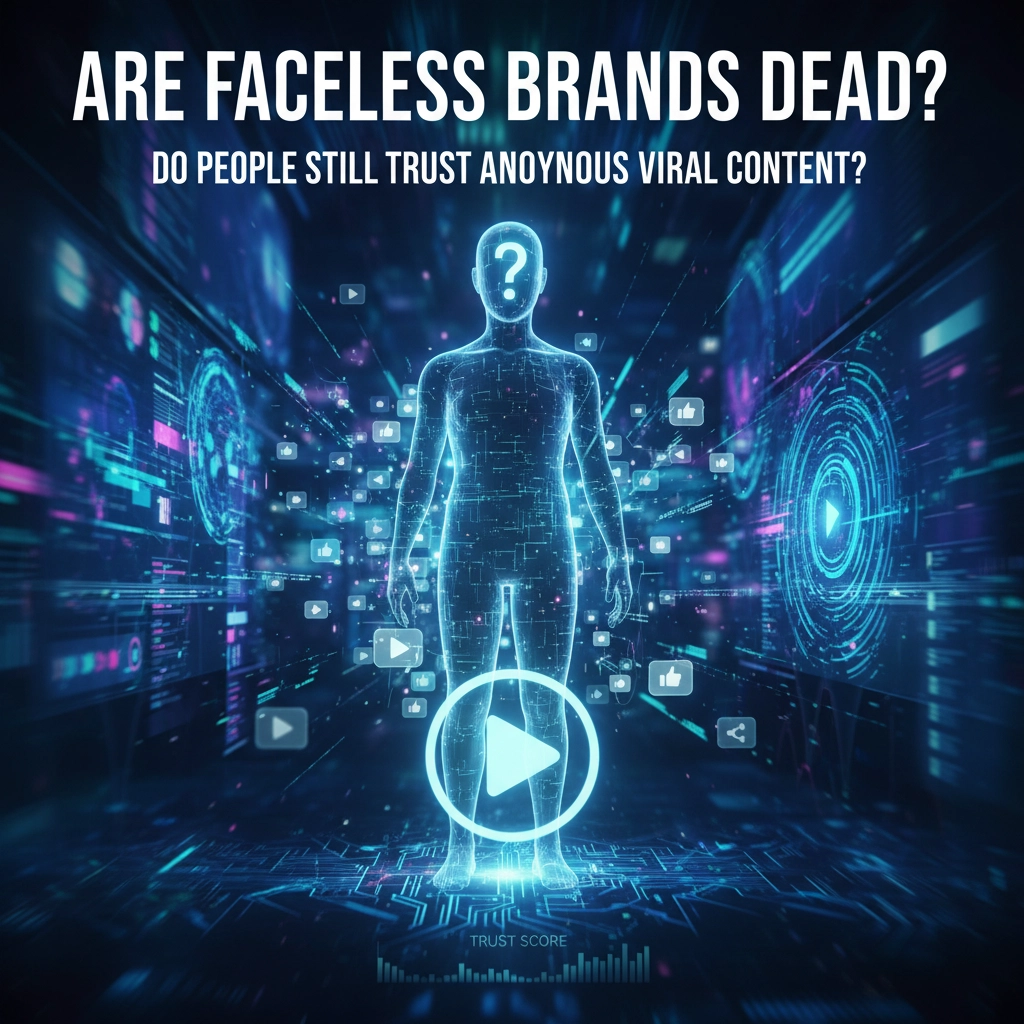
Remember when everyone said you needed to "put your face out there" to build a successful brand? Well, plot twist: some of the most trusted and viral content creators today are completely anonymous.
If you've been wondering whether faceless brands still work in 2025, here's your answer: they're not just surviving: they're absolutely crushing it. And the trust factor? That's stronger than ever, just built differently.
The Faceless Revolution Is Just Getting Started
Here's a stat that might surprise you: 68% of marketers are now adopting faceless strategies to save time and resources. That's not a small trend: that's a massive shift in how businesses operate.

The numbers tell an even bigger story. With digital advertising hitting $786.2 billion by 2026 and 63% of businesses increasing their budgets, faceless marketing has become a legitimate competitive strategy. Companies aren't just experimenting with it: they're betting their futures on it.
Think about the brands you interact with daily. Coca-Cola doesn't need a CEO's face on every ad to make you crave a Coke. Nike's "Just Do It" campaigns inspire millions without featuring the company founders. Apple sells products through sleek, minimalist marketing that focuses entirely on the product experience.
But it's not just the corporate giants. Smaller creators are building massive audiences without ever showing their faces:
• Educational YouTube channels teaching everything from coding to cooking
• TikTok accounts sharing life hacks and tips with animated graphics
• Instagram pages curating memes and inspirational quotes
• Podcast hosts who build loyal followings through voice alone
The shift isn't happening by accident. Consumers in 2025 care more about privacy than ever before. They want value, not vanity. They're looking for solutions, not selfies.
Why Anonymous Content Actually Builds More Trust
Here's where it gets interesting: faceless marketing doesn't mean faceless authenticity. It just changes where that authenticity comes from.
Instead of trusting a person, people trust the consistency of value delivery. When a faceless brand consistently solves problems, entertains, or educates, audiences develop loyalty to the brand itself: not to someone's personality.

This creates a different kind of trust that's actually more stable. Personal brands can crumble overnight if the person behind them makes a mistake or faces controversy. But faceless brands? They're bulletproof against personal scandals because there's no person to scandal.
I learned this firsthand when a friend started a faceless Instagram account sharing daily productivity tips. She was terrified no one would trust advice from an anonymous source. Six months later, she had 50K followers who religiously implemented her suggestions. Her comment section was filled with success stories from people who didn't care about her face: they cared about her results.
The psychology is simple: when you remove the personality, people focus entirely on the value. They're not distracted by whether they like the creator's style, appearance, or personal opinions. They judge purely on one thing: does this content help me?
The Economics Make Perfect Sense
Let's talk money, because that's often where the real truth lives. Faceless creators typically charge based on performance rather than flat fees. This makes them significantly cheaper than traditional influencers who command premium rates for their personal brand equity.
Brands are rapidly increasing spending on faceless creators because of these economic advantages. You get the same (often better) engagement rates at a fraction of the cost. Plus, the content isn't tied to one person's likeness, making it easier to repurpose, scale, and even sell as a standalone asset.

The automation factor is huge too. AI tools like JoggAI, Invideo.AI, and Faceless.video are making it possible to create professional-quality content without showing a face. This means lower production costs, faster turnaround times, and the ability to test more content variations.
For entrepreneurs, this is a goldmine. You can build and sell faceless brands without being personally tied to them forever. Try doing that with a personal brand: good luck extracting your face from the business when you want to move on.
Real Success Stories That Prove It Works
The proof isn't in the theory: it's in the bank accounts of successful faceless creators.
Duolingo's TikTok account became a viral sensation not because of their CEO, but because of their witty, relatable content that perfectly captured their brand personality. They've built millions of followers who engage with an animated owl more than most people engage with human influencers.
Look at the gaming world, where VTubers (virtual YouTubers) are pulling in massive audiences and sponsorship deals. These are literally animated characters, and they're building some of the most loyal fandoms in digital media.
Even in the business world, countless LinkedIn accounts share valuable industry insights using company logos instead of headshots. They build authority through consistent, valuable content rather than personal branding.
The pattern is clear: when content consistently delivers value, people trust it regardless of whether there's a face attached. In many cases, they trust it more because they know the focus is on serving them, not building someone's personal empire.
So here's the million-dollar question: in a world where everyone's trying to be an influencer, could going faceless actually be your biggest competitive advantage?