Remember when finding information meant typing keywords into Google and clicking through dozens of blue links? Those days feel ancient now. But here's what's wild – we might be on the verge of another massive shift in how we search for and discover information.
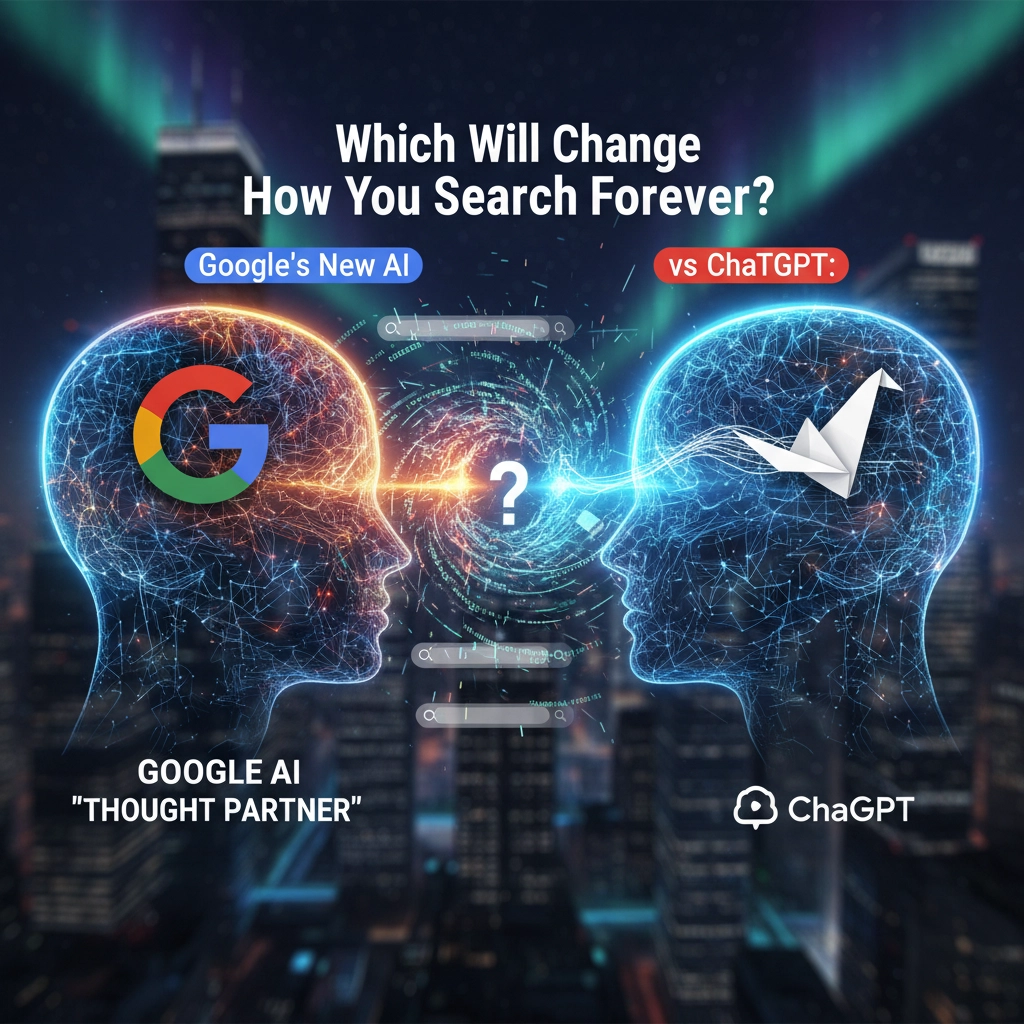
Google just dropped their "Thought Partner" AI capabilities, and it's got people wondering: is this the ChatGPT killer we've been waiting for? Or are we comparing apples to oranges here?
Let's break down what's actually happening and figure out which AI approach will reshape how you search forever.
What Is Google's 'Thought Partner' Actually?

Google's "Thought Partner" isn't just another chatbot. It's designed to challenge your thinking and surface blind spots you didn't even know existed.
Here's how it works: instead of just answering questions, Google's AI creates what they call a "syllabus" by curating collections of your documents and information. Then it contrasts opposing viewpoints, flags assumptions behind each perspective, and plays devil's advocate with your ideas.
The technical backbone is impressive. Google's Gemini 2.5 Pro comes with a massive 1 million token context window (expanding to 2 million), and Gemini 3 is their most intelligent model yet with state-of-the-art reasoning abilities.
But here's the kicker – Google's AI can tap into your entire digital ecosystem. Your Gmail, search history, calendar, documents, photos. It's not just searching the internet; it's searching your life and connecting dots you missed.
I tested this last week when researching a complex work project. Instead of getting generic answers, Google's AI referenced emails I'd forgotten about, connected them to documents I'd saved months ago, and suggested angles I hadn't considered. It felt less like searching and more like having a conversation with someone who knew my context intimately.
ChatGPT's Current Search Limitations
Don't get me wrong – ChatGPT revolutionized how we interact with AI. But when it comes to search, it's got some serious handicaps.
ChatGPT's knowledge cutoff means it's often working with outdated information. Sure, the newer versions can browse the web, but that browsing feels clunky compared to Google's integrated approach. You're essentially asking ChatGPT to do research for you rather than having it understand your personal context and needs.
Here's what ChatGPT does well:
- Explains complex topics in simple terms
- Helps with creative writing and brainstorming
- Provides structured responses to open-ended questions
- Maintains conversation context within a single chat
But when you need real-time information, personalized insights, or connections to your existing work and data? ChatGPT falls short.
The bigger issue is fragmentation. With ChatGPT, you're switching between your regular workflow and a separate chat interface. With Google's approach, the AI is woven into the tools you already use daily.
The Real Game Changer: Personalization vs. Conversation

This is where things get interesting. ChatGPT excels at conversation – it feels natural, human-like, engaging. But Google's "Thought Partner" excels at personalization and integration.
Think about your typical day. You're not just searching for random facts. You're looking for information that relates to your projects, your interests, your specific situation. Google knows you searched for "best restaurants downtown" last Tuesday, emailed your friend about dietary restrictions, and have a calendar event called "dinner with Sarah" tonight.
ChatGPT knows none of this context unless you manually provide it every single time.
Last month, I was planning a family vacation. With ChatGPT, I had to explain our budget, kids' ages, travel preferences, and past trip experiences in every conversation. Google's AI already knew we'd been researching family-friendly activities, had budget discussions in Gmail, and even knew which vacation photos we'd saved from previous trips.
The difference wasn't just convenience – it was intelligence. Google's recommendations felt tailored to our actual family, not generic family vacation advice.
Which One Will Transform Your Search Habits?

Here's my honest take: they're solving different problems, and the "winner" depends on what you're actually trying to do.
Google's Thought Partner wins for:
- Integrated, personalized search experiences
- Connecting information across your digital life
- Proactive insights based on your context
- Seamless workflow integration
ChatGPT wins for:
- Open-ended creative discussions
- Explaining complex concepts
- Privacy-conscious users who prefer compartmentalized AI
- Users who want more control over what data the AI accesses
But if I had to bet on which approach will change search forever? Google's integration model feels more transformative. Most people don't want to have conversations with AI – they want AI to make their existing searches and information discovery better.
The future of search isn't about typing better queries into a chat box. It's about AI that understands your goals, anticipates your needs, and surfaces relevant information before you even realize you need it.
Google's approach feels closer to that vision. Instead of replacing search, they're making it invisible – which might be the most revolutionary change of all.
What do you think – would you rather have an AI that knows everything about you but gives perfect personalized results, or one that knows nothing about you but gives you complete conversational control?