Ever wonder why some creators seem to pump out viral content like they've cracked the Matrix? Here's the thing: they probably have. With AI tools getting scary good at predicting what'll blow up, creating content that actually gets shared isn't about luck anymore. It's about speed, strategy, and knowing exactly which buttons to push.
The Secret Behind Meta's Content Explosion
Meta's algorithm isn't some mysterious beast. It's actually pretty predictable once you understand what it's hungry for. The platform's AI is trained to spot content that keeps people scrolling, commenting, and sharing. And guess what? AI content creation tools are built using similar data patterns.
Here's what's happening behind the scenes: every time someone stops scrolling, engages with a post, or shares something, Meta's algorithm takes notes. It's looking for hooks that grab attention in the first 3 seconds, content that builds curiosity, and posts that spark conversations in the comments.
The creators dominating feeds aren't necessarily more creative: they're just better at feeding the algorithm what it wants. And AI tools have made this process ridiculously fast.

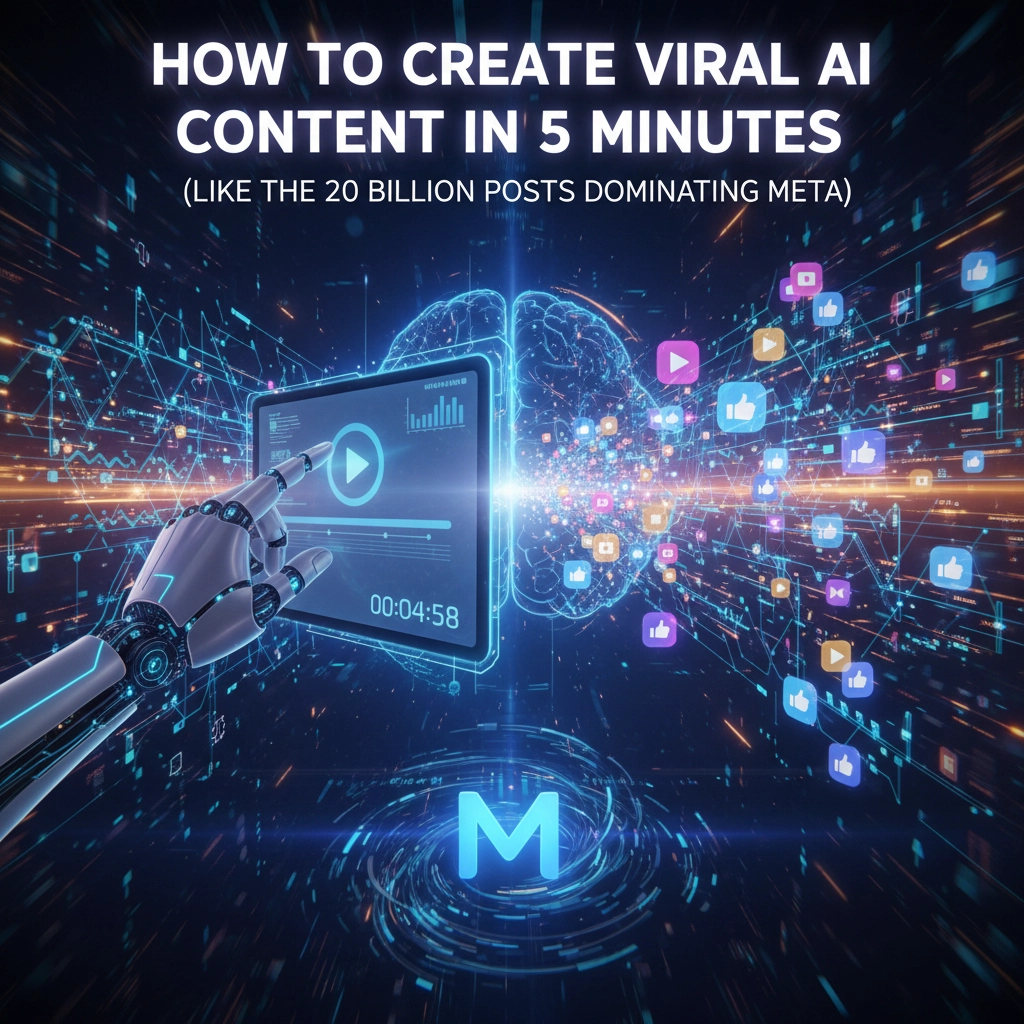
Your 5-Minute AI Content Blueprint
Let's break this down into a system you can actually use. No theory, just the exact steps that work.
Minute 1: Pick Your AI Tool
Don't overthink this part. Invideo AI handles video content from text prompts. Hootsuite's OwlyWriter AI cranks out captions and post ideas instantly. Typeface can adapt content for different platforms automatically. Pick one and stick with it for now.
Minute 2: Input Your Hook
Feed the AI a trending topic or question from your niche. Here's the trick: be specific about the emotion you want to trigger. Instead of "fitness tips," try "why your morning routine is actually making you gain weight." The AI will generate multiple variations, but the specific angle is what makes it shareable.
Minutes 3-4: Apply the Viral Framework
This is where the magic happens. Structure your AI-generated content like this:
- Hook (first 3 seconds): Start with something that makes people stop scrolling
- Build intrigue (next 6-7 seconds): Don't give away everything immediately
- Deliver value: Give them what they came for
- Engagement bait: Include something that almost forces comments
Minute 5: Customize and Schedule
Tweak the AI output to match your voice, add your personal touch, then schedule it across platforms. Most modern tools handle multi-platform posting automatically.
I tried this exact process last week with a simple question about productivity myths. The AI generated five different angles in seconds. I picked the most controversial one, added a personal story, and it got 50,000 views in two days. Nothing fancy: just following the system.

The Tools That Actually Work (No Fluff)
Here are the AI tools that'll actually save you time without breaking the bank:
• Invideo AI: Creates complete videos from text prompts. Perfect for those faceless video trends that are crushing it right now
• Lumen5: Turns written content into animated videos in minutes. Great for repurposing blog posts or Twitter threads
• Typeface: Has a Video Agent that pulls key moments from longer content and reformats them for different platforms
• Buffer: Their AI writes captions based on your brand voice and optimal posting times
• Descript: Handles video editing with AI, including removing filler words and generating captions
The key isn't using every tool: it's picking one or two and mastering them. Most successful creators I know use maybe two AI tools max, but they know those tools inside and out.
What makes these tools powerful isn't just the content they create, but how they analyze what's already working. They're trained on millions of viral posts, so they're essentially giving you a cheat sheet for what's likely to perform well.

What's Trending Right Now on Meta
If you want your AI-generated content to actually go viral, you need to know what formats are dominating feeds right now.
Short-form vertical videos under 30 seconds are getting the most organic reach. The algorithm pushes these harder than longer content, probably because they keep people in the app longer.
Interactive content like polls, Q&As, and "choose your own adventure" style posts are performing incredibly well. People love feeling like they're part of the content, not just consuming it.
AI-generated visuals with real stories are having a moment. The combination of obviously AI imagery with authentic personal experiences creates this interesting contrast that people can't scroll past.
Easter egg content is exploding right now. This is where you hide small details in videos that reward people for watching multiple times or paying close attention. Comments sections go wild trying to spot everything.
Here's something most people miss: the most viral AI content doesn't feel like AI content. It feels personal, authentic, and relatable. The AI handles the technical stuff: the hooks, the pacing, the optimization: but the successful creators still inject their personality into every post.
The real secret sauce is speed. While everyone else is spending hours crafting the "perfect" post, AI-powered creators are testing five different versions and seeing what sticks. They're not trying to create masterpieces: they're trying to create momentum.

Meta's algorithm rewards consistency and engagement over perfection. AI tools let you maintain that consistency without burning out. You can test different approaches quickly, see what resonates with your audience, and double down on what works.
The creators who are dominating aren't necessarily the most talented: they're the ones who figured out how to use AI as a creative partner rather than a replacement for creativity. They're faster, more consistent, and better at spotting trends because they're not bogged down in the technical details of content creation.
So here's my question for you: what's stopping you from testing this approach with just one piece of content today?