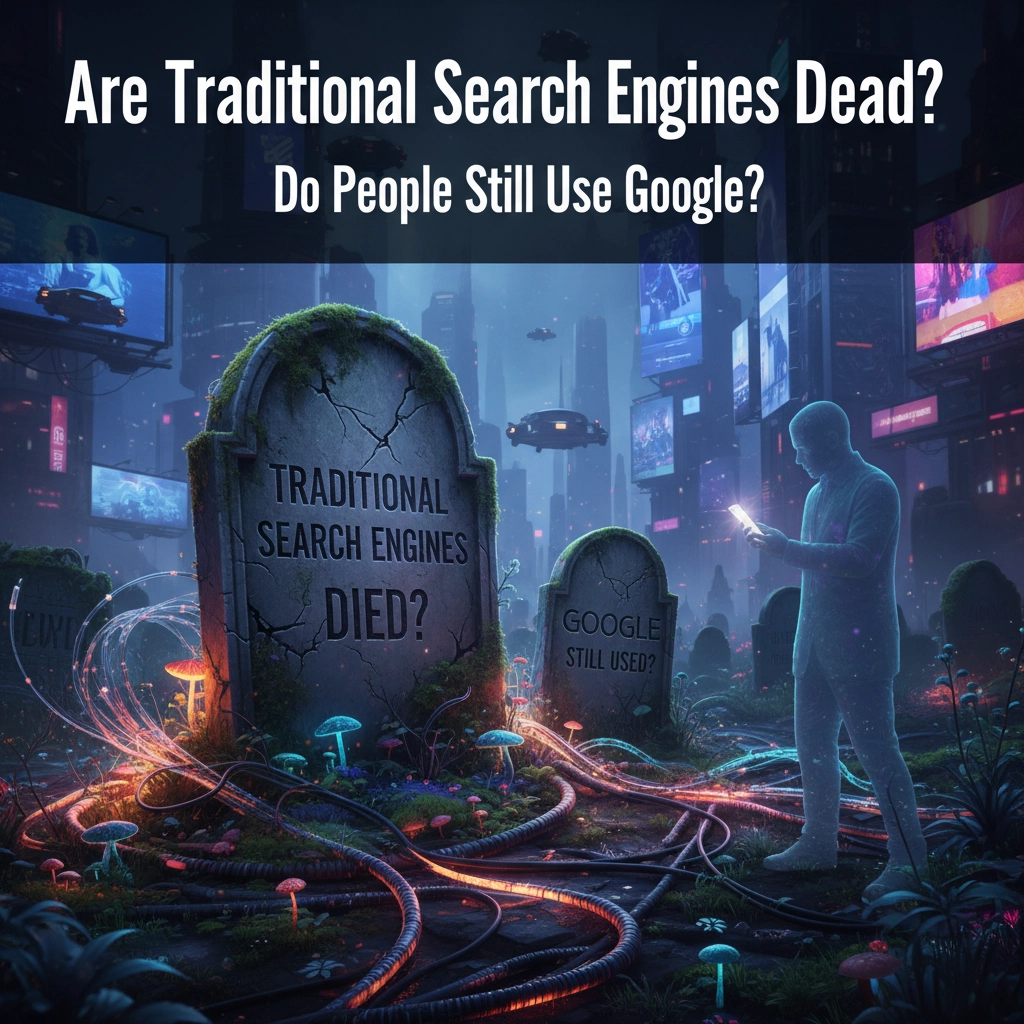
Remember when everyone said Netflix would kill movie theaters? Or when smartphones would make cameras obsolete? Well, here's another "death" prediction that's turning out to be completely wrong: traditional search engines are supposedly dying because of AI.
Spoiler alert: They're not. Not even close.
Despite all the ChatGPT hype and AI chatbot buzz, Google and traditional search engines are actually doing better than ever. Let's dive into what's really happening behind all the clickbait headlines.
Google's Market Dominance Isn't Going Anywhere
Here's a fact that might surprise you: Google still controls about 88-90% of the global search market. That's not a typo. While everyone's been talking about AI "disrupting" search, Google's been quietly maintaining its massive lead.

The numbers are pretty wild when you think about it:
- Google receives 139.9 billion visits monthly
- 87% of Americans are considered "heavy Google users" (visiting 10+ times per month)
- That heavy user percentage actually increased from 84% in 2023
I was talking to my friend Sarah last week about this. She's always been an early adopter – first to try new apps, always testing the latest tech gadgets. Even she admitted that despite trying ChatGPT and other AI tools, she still finds herself typing "google.com" dozens of times a day out of pure habit.
"It's just… automatic," she said. "I need to know if that restaurant is open, or when a movie comes out, or literally anything – I Google it without thinking."
And Sarah's not alone. About 95% of Americans still use traditional search engines monthly, and this number hasn't budged much despite AI tools exploding in popularity.
People Are Actually Searching More Than Ever
Here's where it gets really interesting. Instead of AI reducing how much people search, it's actually had the opposite effect. Google searches grew by 22% in 2024 compared to the previous year.
Think about that for a second. In a year when ChatGPT became a household name and everyone was talking about AI replacing search, people actually searched more.

The average desktop user now performs about 109.9 Google searches per month – that's up 10.4% from previous measurements. Mobile users aren't far behind with around 51 searches monthly.
Why is this happening? It turns out that AI tools often give people starting points, but they still need Google to verify information, find specific sources, or get real-time updates. AI might tell you about a restaurant, but you're still going to Google to check if it's open today or read recent reviews.
AI and Search Are Friends, Not Enemies
The narrative that AI is "killing" search engines misses a huge point: most people use both. It's not an either/or situation.
Here are the key stats that tell the real story:
• 99% of people who use AI platforms still use traditional search engines
• Only 16.45% of traditional search users also use AI platforms
• 38% of Americans have tried AI tools, but growth has slowed significantly
• 72% of searchers actually use Google's AI Overview feature when it appears

What's really happening is that Google has been smart enough to integrate AI directly into search results. Those AI-powered answer boxes at the top of search results? That's Google's way of giving you the best of both worlds – AI assistance within the familiar search experience you already know.
It's kind of like how Netflix didn't kill TV – it just changed how we watch TV. AI isn't killing search; it's changing how search engines work.
What This Really Means for You
So where does this leave us? Traditional search engines aren't going anywhere, but they are evolving. About 60% of Google searches now end without clicking through to a website because the AI-powered answer boxes give people what they need right away.
This shift has huge implications:
For everyday users: You're probably already experiencing this evolution without realizing it. Those quick answers at the top of Google results? That's AI making your search experience faster and more efficient.
For businesses: The game is changing. Getting featured in those AI answer boxes is becoming just as important as ranking #1 in traditional results.
For content creators: The focus is shifting from just getting clicks to providing authoritative, comprehensive information that AI can reference and summarize.

The truth is, we're not seeing the death of search engines – we're watching them get smarter. Google processes billions of queries daily not despite AI, but because it's successfully integrated AI to make search more useful.
Rather than replacing search, AI has become search's helpful sidekick. ChatGPT might help you brainstorm ideas or explain complex topics, but when you need to find that specific restaurant's phone number, check movie showtimes, or research the latest news on your favorite topic, you're still heading to Google.
The search engine "death" predictions remind me of all those articles from the early 2000s about how the internet would kill newspapers, books, and face-to-face conversation. Some things changed, sure, but people adapted rather than abandoned familiar tools entirely.
What do you think – have you found yourself using Google less since AI tools became popular, or are you like most people who ended up using both? And more importantly, what would it actually take for you to stop Googling things?